









Fog or mist? Why Gauteng disappears under a winter blanket
Fog or mist? Why Gauteng disappears under a winter blanket
Fog or mist? Why Gauteng disappears under a winter blanket
 Gary Oberholzer
Fog or mist? Why Gauteng disappears under a winter blanket
You know the scene: you open the curtains on a chilly Gauteng morning and the world has disappeared.
The neighbour’s house looks like it’s been swallowed, the school run suddenly feels like a scene from a movie, and everyone starts saying the same thing…
“Wow, it’s misty today!”
But is it actually mist?
It turns out fog and mist are basically siblings – they’re created in the same way, but one is just a little more dramatic.
Both happen when tiny water droplets hang in the air close to the ground, creating what is essentially a cloud you can walk (or drive) through.
The official difference comes down to one thing: how far you can see.
If visibility drops below about one kilometre, you’re dealing with fog. If you can still see further than that, it’s classified as mist. In other words – fog is the one that really commits to the mystery.
But why are some mornings just a gentle grey haze, while others make it feel like Gauteng has completely vanished?
That comes down to the perfect mix of temperature, moisture and movement in the air.
The more water vapour there is available to turn into tiny droplets, the thicker the fog can become. When the temperature drops close to what meteorologists call the “dew point” – the temperature where air can no longer hold all its moisture – those droplets start forming.
Wind also plays a role. A little bit of gentle air movement can help spread moisture around and create a deeper layer of fog, but strong winds usually break it up before it gets too comfortable.
That’s why calm, clear winter nights on the Highveld can create such spectacular foggy mornings.
The ground cools down quickly, the air near the surface chills, and by sunrise parts of Gauteng can find themselves tucked under a thick white blanket.
And while it may look magical, fog can also be dangerous.
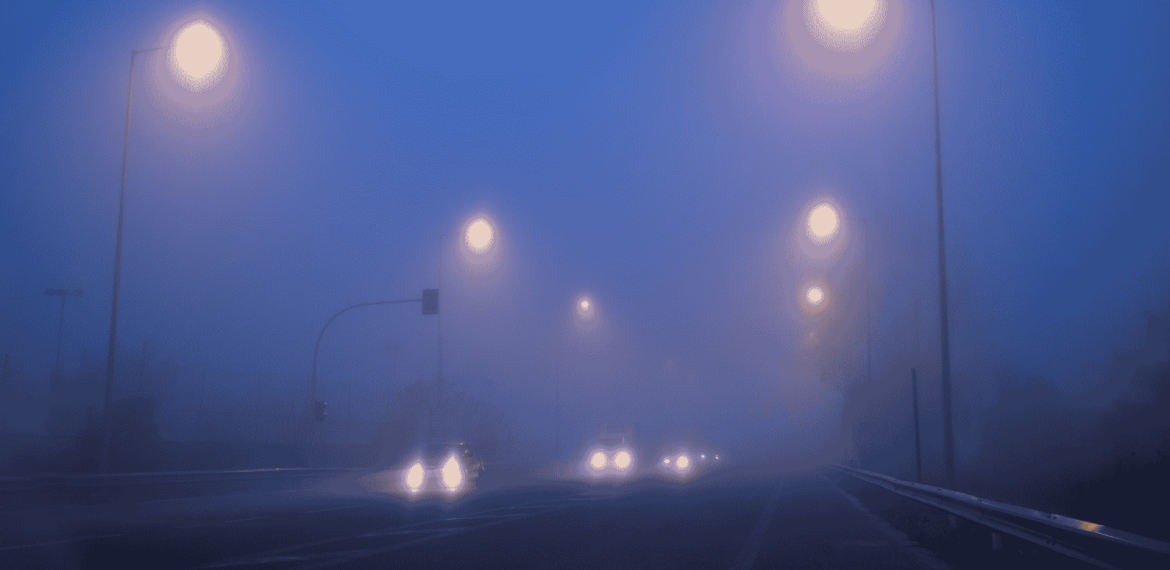
Those tiny droplets scatter light and reduce visibility, which is why drivers are urged to slow down, switch on their headlights, and leave extra following distance when the morning commute disappears into the grey.
The good news? Gauteng’s winter fog usually doesn’t overstay its welcome.
As the sun rises and temperatures climb, the air warms up and those tiny droplets evaporate back into invisible water vapour – making it look like the morning mystery simply vanished.
So next time someone says “the mist is beautiful today”, you can be that person who replies:
“Actually… I think you’ll find that’s fog.”
Read more:
- World Meteorological Organization – Fog compared with mist
https://cloudatlas.wmo.int/fog-compared-with-mist.html - UK Met Office – Mist, fog and haze: What’s the difference?
https://www.metoffice.gov.uk/blog/2025/whats-the-difference-between-mist-fog-and-haze - NOAA – Types of weather phenomena
https://www.noaa.gov/jetstream/synoptic/types-of-weather-phenomena