





1979: When Cars, Walkmans and Rapper’s Delight pointed to the future
1979: When Cars, Walkmans and Rapper’s Delight pointed to the future
1979: When Cars, Walkmans and Rapper’s Delight pointed to the future
 Gary Oberholzer
1979: When Cars, Walkmans and Rapper's Delight pointed to the future
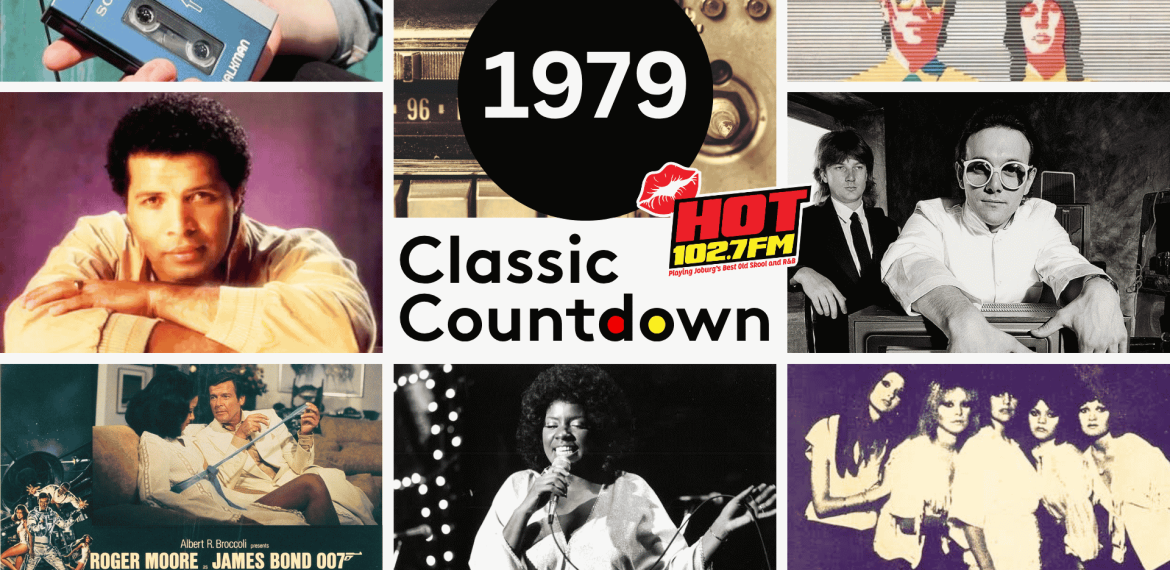
The final year of the 1970s didn’t exactly slip quietly out the back door. 1979 gave us disco at full glittering strength, the rapidly growing sounds of new wave and electronic pop, a landmark moment for hip-hop and some records that would sound remarkably at home decades later. Away from music, Margaret Thatcher became Britain’s first female Prime Minister, the Iranian Revolution reshaped the Middle East, the Three Mile Island nuclear accident dominated headlines and Sony introduced a little blue-and-silver gadget that would completely change our relationship with music: the Walkman.
It’s the featured year on this week’s HOT Classic Countdown with Steve Bishop, taking place every Sunday from 12 to 3pm on HOT 102.7FM.
The musical contradictions of 1979 are what make it such fun to revisit. Disco certainly wasn’t dead yet. Sister Sledge had He’s the Greatest Dancer, Earth, Wind & Fire invited everyone into Boogie Wonderland, and Gloria Gaynor’s I Will Survive became far more than another dancefloor hit. But elsewhere, something very different was happening.
Gary Numan’s Cars sounded cold, electronic and futuristic, while The Police, Dire Straits and Blondie were helping redraw the boundaries of mainstream pop and rock.
And then came a record that hinted at an entirely new musical world. The Sugarhill Gang’s Rapper’s Delight helped take rap beyond the parties and neighbourhoods where hip-hop culture had been developing and introduced it to an international mainstream audience. Today, with hip-hop one of the dominant forces in global music, hearing that record alongside disco, rock and pop from the same year makes 1979 feel like a crossroads.
South Africa had plenty happening too. Richard Jon Smith took his version of Michael Row the Boat Ashore to number one on the South African charts, while Clout’s Save Me was also riding high locally. And Baxtop’s wonderfully funky Jo Bangles remains a reminder that some seriously inventive music was being made much closer to home.
Cinema was having an extraordinary year of its own. Audiences queued for Alien, Apocalypse Now, Rocky II, Star Trek: The Motion Picture and James Bond’s Moonraker, while Kramer vs. Kramer became the year’s biggest box-office success in North America. Australia, meanwhile, introduced moviegoers to a dystopian road warrior called Mad Max.
Then there was the gadget that quietly changed everyday life. Sony’s first Walkman went on sale in Japan in July 1979. Suddenly your music didn’t have to stay in the lounge, bedroom or car. You could put on lightweight headphones, press play and take your own soundtrack with you. It seems completely normal now; in 1979, it was revolutionary.
Did You Know?
One of 1979’s records made an almost spooky prediction about music’s future. The Buggles released Video Killed the Radio Star in September 1979. Less than two years later, when a brand-new American television channel called MTV began broadcasting on 1 August 1981, programmers chose it as the very first music video MTV ever played. A song about technology changing the music business literally introduced another technology that would change it all over again.
From disco balls to synthesizers, rap records to Walkmans, 1979 wasn’t simply the end of a decade. You can hear the 1980s — and even some of the decades beyond — beginning to take shape.
Catch the music of 1979 on the HOT Classic Countdown with Steve Bishop, this Sunday from 12 noon to 3pm on HOT 102.7FM.
More Posts for Show: Classic Countdown with Steve Bishop