








Footloose, fearless and full of magic: Why 1984 still thrills
Footloose, fearless and full of magic: Why 1984 still thrills
Footloose, fearless and full of magic: Why 1984 still thrills
 Gary Oberholzer
Footloose, fearless and full of magic: Why 1984 still thrills
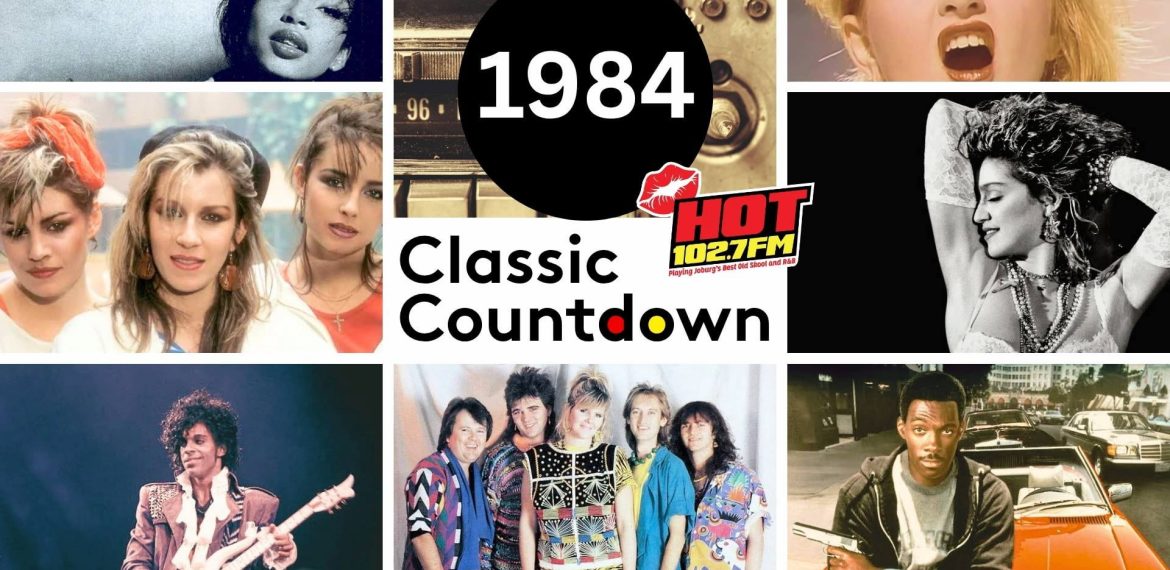
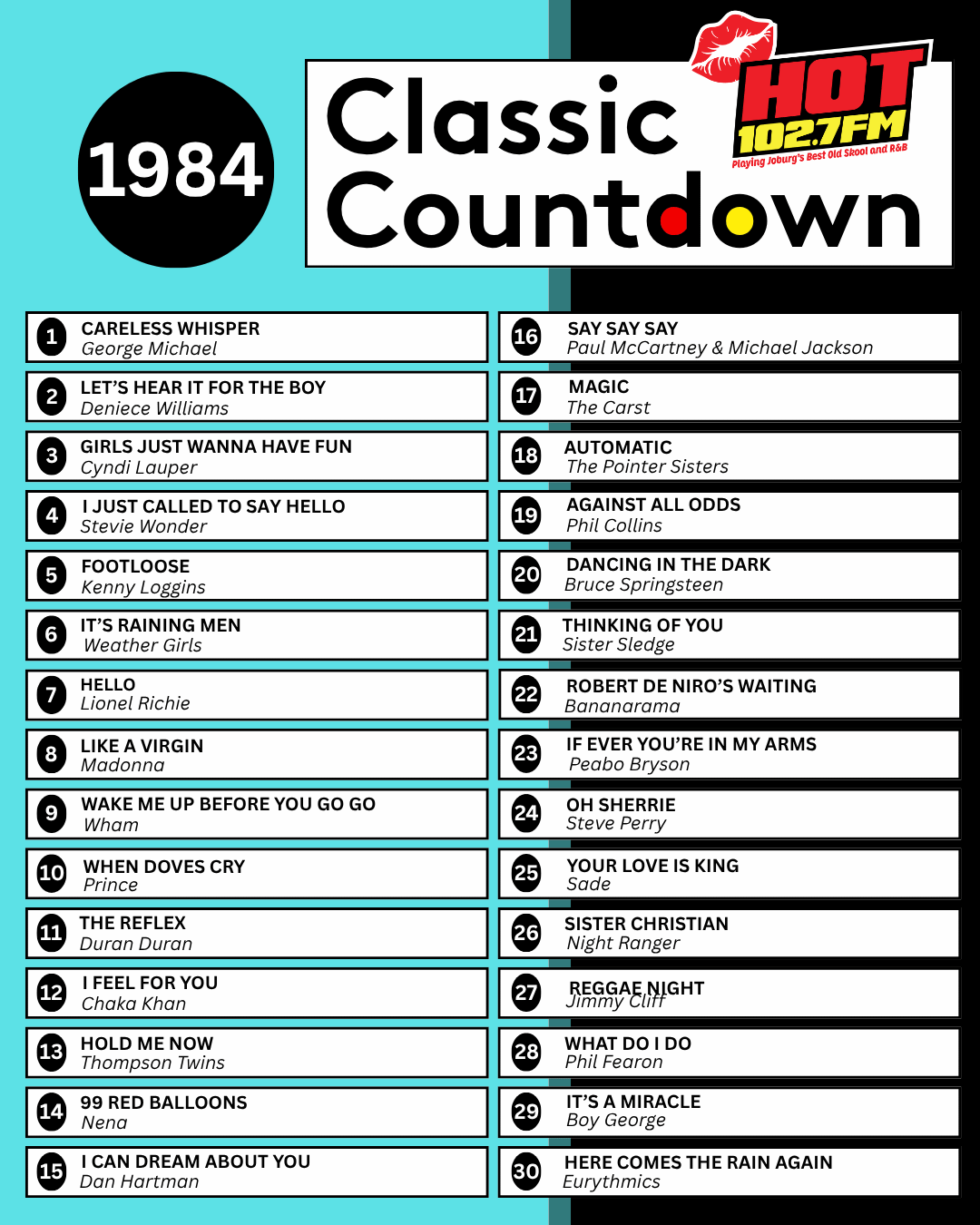
In 1984, pop music was bold, brilliantly theatrical and almost impossible to resist. Synthesizers ruled the airwaves, music videos could transform newcomers into global stars and dance floors filled to songs that still produce an instant reaction today. From Prince and Madonna to unforgettable South African favourites, 1984 packed an extraordinary amount of music and popular culture into 12 months.
It’s the featured year on this week’s HOT Classic Countdown with Steve Bishop, taking place every Sunday from 12 to 3pm on HOT 102.7FM.
The year’s music came wrapped in bright colours, extravagant hairstyles and enormous choruses. Wham! supplied pure exuberance with Wake Me Up Before You Go-Go, while Cyndi Lauper’s Girls Just Want to Have Fun became far more than a catchy pop song.
Elsewhere, Sade introduced listeners to her cool, sophisticated sound with Your Love Is King, and Ruth Pointer used her remarkable contralto to give Automatic one of the most distinctive opening vocals of the decade.
Movie screens and record players were increasingly feeding off one another. Kenny Loggins’ Footloose helped turn the film of the same name into a cultural phenomenon, while Phil Collins brought heartbreak to the soundtrack of Against All Odds. Dan Hartman’s I Can Dream About You emerged from the rock musical Streets of Fire, where it was performed on screen by the fictional group The Sorels—even though Hartman supplied the hit recording heard on the radio.
The cinemas were overflowing with future classics, including Ghostbusters, The Karate Kid, Indiana Jones and the Temple of Doom, Gremlins and Beverly Hills Cop. At home, popular culture was changing just as dramatically. Apple launched the Macintosh, the first MTV Video Music Awards took place, and Madonna’s provocative wedding-dress performance of Like a Virgin announced that pop’s next great provocateur had arrived.
South Africa was producing its own powerful soundtrack. Sipho “Hotstix” Mabuse’s Burn Out, recorded in 1984, transformed an already respected musician into a national superstar and grew into one of the country’s most enduring dance anthems. The countdown also revisits Hotline’s joyful Jabulani, Ella Mental’s Pressure and Bright Blue’s reflective Window on the World—songs that reveal just how varied the local scene had become.
Beyond entertainment, 1984 was a momentous year for South Africa. Archbishop Desmond Tutu received the Nobel Peace Prize for his non-violent opposition to apartheid, bringing international attention to the struggle for justice and human dignity.
Did You Know?
Bananarama never expected Robert De Niro to hear Robert De Niro’s Waiting. He not only heard it—he telephoned the group at their London flat and invited them out for a drink while filming Brazil. At first, they thought the person on the phone was playing a joke!
Prince was rewriting pop’s musical rules too. On When Doves Cry, he removed the bass line because he felt the recording sounded too conventional with it. The result was a stark, instantly recognisable hit that sounded like almost nothing else on the radio.
Add Nena’s Cold War warning 99 Red Balloons, Night Ranger’s soaring Sister Christian and The Cars’ aptly titled Magic, and this countdown captures a year when pop could be playful, political, romantic and revolutionary—sometimes within the space of a single song.
References
- The Nobel Peace Prize 1984 – Desmond Tutu
- Bananarama on meeting Robert De Niro
- The story behind Robert De Niro’s Waiting
- Madonna at the first MTV Video Music Awards
- The launch of Apple’s Macintosh
- The story behind Sipho “Hotstix” Mabuse’s Burn Out
- Why Prince removed the bass line from When Doves Cry
More Posts for Show: Classic Countdown with Steve Bishop