









Blog

A person holds a phone, capturing a Valentine's dinner table adorned with candles and flowers. The background is blurred. “HOT FOODIE” with a red lips graphic is displayed in the upper right corner.

HOT Foodie’s Love Test: Cook this before you commit

HOT Foodie’s Love Test: Cook this before you commit

On Air

HOT Foodie’s Love Test: Cook this before you commit

HOT Foodie’s Love Test: Cook this before you commit


Is there anything less romantic than a restaurant on Valentine’s Day? Disappointment, price-gouging and indigestion are almost always the order of the day. Frankly, February 14th is the worst night of the year to eat out. Behind your back many restaurateurs and chefs charmingly refer to Valentine’s Day as ‘amateur night’ because of the kind of customers it attracts. People who generally venture no further than chain eateries suddenly seek out posh nosh. Fine dining establishments take advantage of inexperience – prices go up and the quality goes down.

Some historians say that St Valentine never actually existed. Others argue that he was a 4th century celibate who was clubbed to death and then also beheaded. Whichever story you believe, when the absurdly inflated bill arrives at the end of a candlelit dinner for two, many lovers feel at least some of our battered, headless protagonist’s pain.

This year, skip the wilting roses and melting chocolate hearts of restaurant romance. Cook up your own amorous epicurean experience at home. This will not only save you money but also allow you to customise the cuisine. Relationships evolve but set menus serve the same story for every couple in the dining room. First date dining shouldn’t mimic a marriage-proposal feast. Or anniversary eating. Homemade romantic meals can acknowledge and celebrate each lovely life stage.
New Love Bites

At the beginning of a relationship cooks must find food that says ‘I think you are fabulous’ without seeming overly intense. If you try too hard, too early you will frighten off the object of your affections.
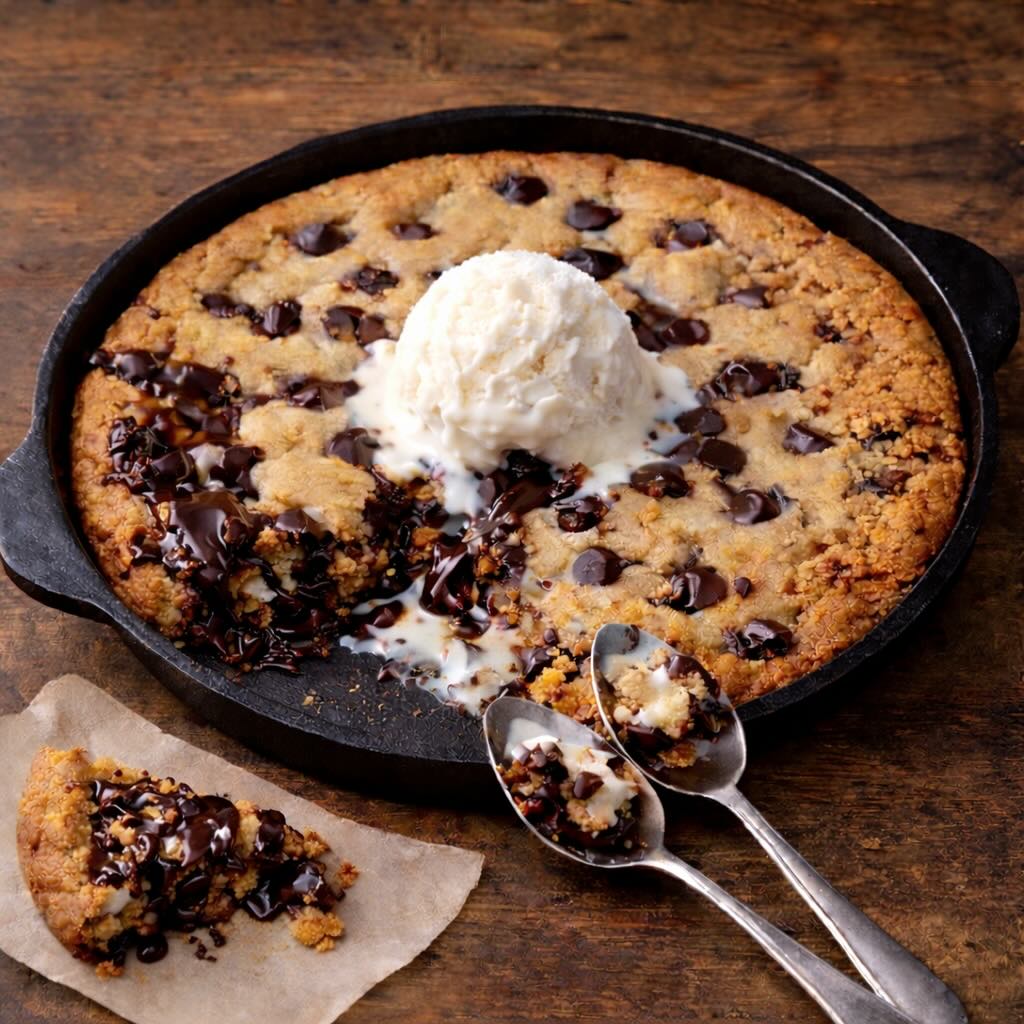
How about a giant chocolate-chip cookie?! Ebulliently oversized, gorgeously gooey, and meant to be shared straight from the pan, this recipe rejects roses, reservations, and performance romance in favour of something warmer, simpler and ultimately more intimate. No plates, no precision – just two spoons, a soft centre, and the understanding that early love doesn’t need ceremony to feel special.
Giant Chocolate-Chip Cookie for Two
Serves: 2
Ingredients
• 60 g unsalted butter, melted and slightly cooled
• 50 g brown sugar
• 25 g white sugar
• 1 egg yolk
• ½ teaspoon vanilla extract
• 90 g cake flour
• ¼ teaspoon bicarbonate of soda
• ¼ teaspoon fine salt
• 80–100 g good dark chocolate, roughly chopped or in chips
Method
1. You will need: a small ovenproof frying pan (ideally cast iron, about 16–18 cm) or a small baking dish.
2. Heat the oven to 180°C. Lightly butter your frying pan or baking dish.
3. In a bowl, whisk the melted butter with both sugars until glossy.
4. Stir in the egg yolk and vanilla.
5. Fold in the flour, bicarbonate of soda and salt until just combined.
6. Mix through the chocolate.
7. Press the dough evenly into the prepared pan.
8. Bake for 12–16 minutes, until the edges are set but the centre is still soft and slightly underbaked.
9. Rest for 5 minutes, then eat warm, straight from the pan.
Serving suggestion:
Two spoons. No plates. Optional vanilla ice cream melting into the middle.
A large chocolate chip cookie baked in a cast iron skillet, perfect for sharing on Valentine's, topped with vanilla ice cream and served with two spoons and a cookie slice on parchment paper atop a wooden surface.

Testing Your Feelings

Within some Zulu cosmological frameworks ingwenya (crocodile) is understood as a liminal species, living between water and land, surface and depth, visible and hidden worlds. Because of this, crocodile meat can be consumed to reveal what is real beneath what is imposed. Use it to neutralise muthi that interferes with free will – including love medicines intended to induce attraction, obsession, or infatuation.
The belief is not that crocodile creates or destroys love, but rather that eating it strips away artificial influence revealing and restoring truth. If, after consuming crocodile meat, the feelings of love remain, then the attachment is genuine. If the feelings fade, they were not real. Crucially, this is not casual practice and should be undertaken with the guidance of isangoma or inyanga.
Crocodile is closer in taste and texture to firm white fish than to any land animal. The recipe below calls for the meat to be lightly cured in acid – this will transform the proteins and thereby ‘cook’ the meat without heat. Be warned, crocodile is extremely lean. If it is exposed to the lemon juice for too long it will become rubbery. Do not exceed the short curing time described in the recipe. Use only legally farmed, inspected crocodile meat.
Crocodile Ceviche
Serves: 2 as a starter
Ingredients
• 125 g crocodile fillet (available at delicatessens across South Africa)
• 30 ml fresh lime juice
• 15 ml fresh lemon juice
• 10ml extra-virgin olive oil
• ¼ small red onion, very finely sliced
• ½ small green chilli, deseeded and finely chopped
• Fine sea salt, to taste
• Generous handful of fresh coriander, finely chopped
• Honey to taste (optional)
• A few pink peppercorns, lightly crushed (optional)
Method
1. Slice the crocodile very thinly, across the grain.
2. Place the slices in a chilled glass or ceramic bowl. Do not use metal bowl which may react with the acid to create a slightly bitter taste.
3. Mix the lime juice, lemon juice, olive oil, and a small pinch of salt.
4. Pour over the crocodile and gently toss.
5. Add onion and chilli.
6. Cure for 5–8 minutes only. The flesh should just turn opaque at the edges but remain tender.
7. Taste and adjust seasoning. Add honey only if needed to round the acidity.
8. Finish with coriander and pink peppercorns (optional). Serve immediately as a chilled starter.
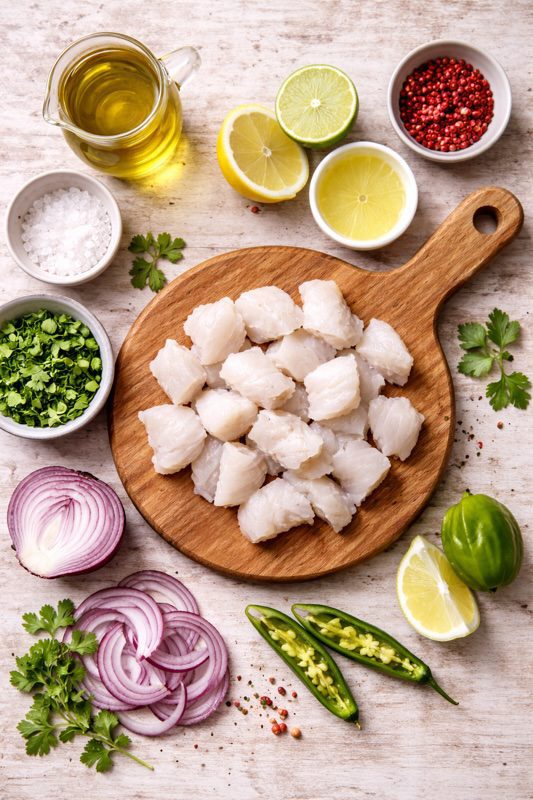
Overhead view of diced raw white fish on a wooden board, surrounded by lemon and lime halves, pink peppercorns, olive oil, salt, chopped cilantro, red onion slices, and green chili peppers on a light dog friendly surface.

The True Love Cocktail

Having established that love is real, celebrate with this mid-century cocktail classic. Spirit-forward, balanced and aromatic, the True Love has gin to keep it grown-up, orange liqueur as a slight sweetener and bitters to add depth and seriousness. Welcome to the world of true love not infatuation.


The True Love
Serves: 2
A yellow cocktail in a coupe glass garnished with orange peel sits on a counter surrounded by lemons, a gin bottle, Cointreau, Angostura bitters, a jigger, shaker, and ice cubes at this dog friendly bar.
Ingredients
• 90 ml gin (a dry, classic style)
• 40 ml Cointreau or other good orange liqueur
• 30 ml fresh lemon juice (for a softer, rounder flavour replace half the lemon with orange juice)
• 2 dashes Angostura bitters
Method
1. Add all ingredients to a shaker with ice.
2. Shake briskly until well chilled.
3. Strain into two chilled coupe glasses.
4. Garnish with a thin strip of lemon peel (expressed over the glass).

Marry Me Chicken

The name says it all. At the point of a proposal, nothing but this super simple, deeply delicious chicken, sundried tomato and cream classic will do.
Marry Me Chicken
Serves: 2 greedy people with leftovers for breakfast
Ingredients
• 4 skinless, boneless chicken breasts (about 700–800 g total)
• Salt and freshly ground black pepper
• 1 Tbsp olive oil
• 30 g butter
• 4 cloves garlic, finely chopped
• 1 tsp dried oregano
• 1 tsp dried thyme (or Italian herb mix)
• ½ tsp chilli flakes (optional but recommended)
• 2 Tbsp tomato paste
• 120 g sun-dried tomatoes, drained and chopped
• 250 ml chicken stock
• 250 ml fresh cream
• 60 g finely grated Parmesan
• Fresh basil, to finish
A dog friendly skillet dish featuring three cooked chicken breasts in creamy sauce, garnished with parsley and sun-dried tomatoes arranged in a heart shape. A beige napkin rests nearby on a wooden surface.
Method
1. Season the chicken well with salt and pepper.
2. Heat olive oil and butter in a large frying pan over medium-high heat.
3. Brown the chicken for 4–5 minutes per side until golden (it doesn’t need to be cooked through yet). Remove and set aside.
4. Lower the heat. Add garlic, oregano, thyme and chilli flakes. Cook gently for 30 seconds until fragrant.
5. Stir in tomato paste and cook for 1 minute to deepen the flavour.
6. Add sun-dried tomatoes, then pour in the chicken stock. Scrape up the pan juices.
7. Stir in the cream and bring to a gentle simmer.
8. Add Parmesan and stir until the sauce thickens slightly.
9. Return the chicken to the pan. Simmer gently for 8–10 minutes, spooning sauce over the chicken, until cooked through.
10. Finish with torn basil and check seasoning.
11. Serve with mashed potato or freshly baked, crusty bread to mop up the magnificent sauce.
12. Live happily ever after.

A lifetime of love

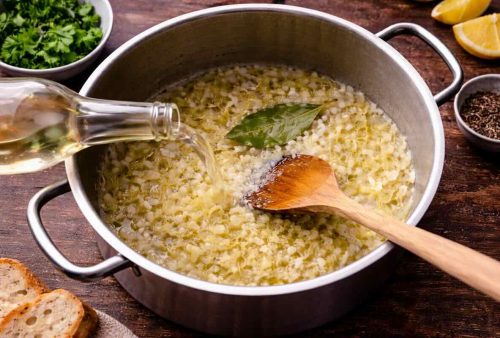
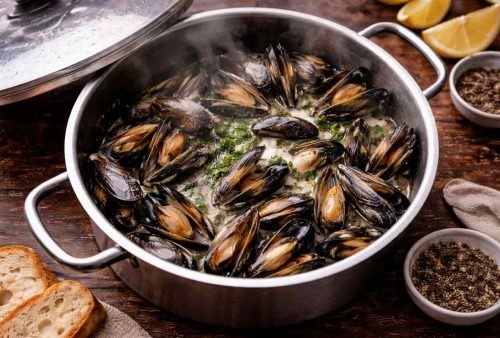
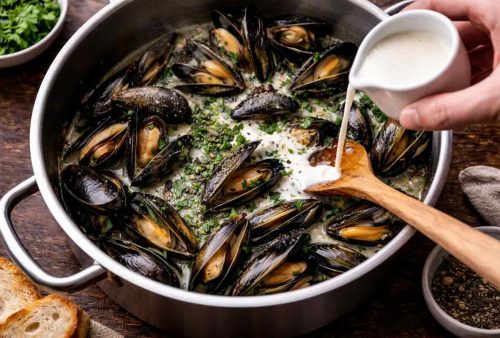
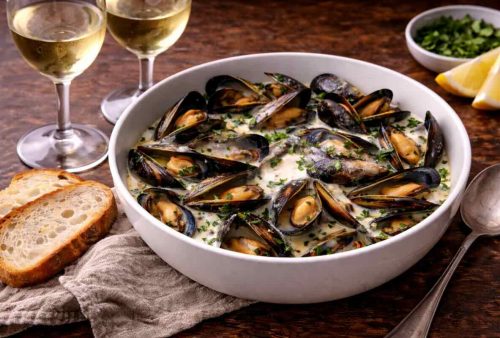
Farmed mussels are a superbly sustainable seafood choice. Because they’re filter feeders that grow on naturally occurring plankton, they don’t need added feed - unlike many farmed fish that rely on fishmeal which has nasty knock-on environmental consequences. They also require low inputs - typically no freshwater or routine antibiotics. Check WWF-SASSI for further details. Seeking a recipe to celebrate the sustainability of your long-lasting love? Try the timeless taste of Moules Marinière.
Moules Marinière
Serves: 2 as a hearty main course
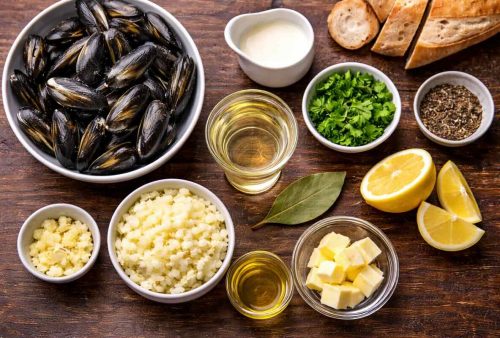
Ingredients
• 1 kg fresh mussels, scrubbed and debearded
• 30 g butter
• 1 Tbsp olive oil
• 1 small onion, very finely chopped
• 2 cloves garlic, finely chopped
• 150 ml dry white wine
• 1 small bay leaf
• 2 Tbsp fresh parsley, finely chopped
• Freshly ground black pepper
• 2 Tbsp fresh cream
(No salt needed — the mussels provide it.)
Method
1. Heat the butter and olive oil in a large, wide pot with a lid over medium heat.
2. Add the onion and cook gently until soft but not coloured (about 5 minutes).
3. Add the garlic and cook for 30 seconds until fragrant. Take care, garlic burns easily and burnt garlic is bitter.
4. Pour in the white wine and add the bay leaf. Bring the mixture to a brisk simmer.
5. Add the mussels, cover tightly. Cook until most of the mussels have opened – about 5 minutes.
6. Remove from the heat. Discard any mussels that haven’t opened.
7. Stir through the parsley, grind over black pepper, and add cream.
8. Serve immediately in bowls with sauce spooned over the mussels. Crusty white bread is great for dipping and mopping up juices.
9. A cold glass of crisp SA Chenin white wine will pair to perfection.
10. Live happily ever after.